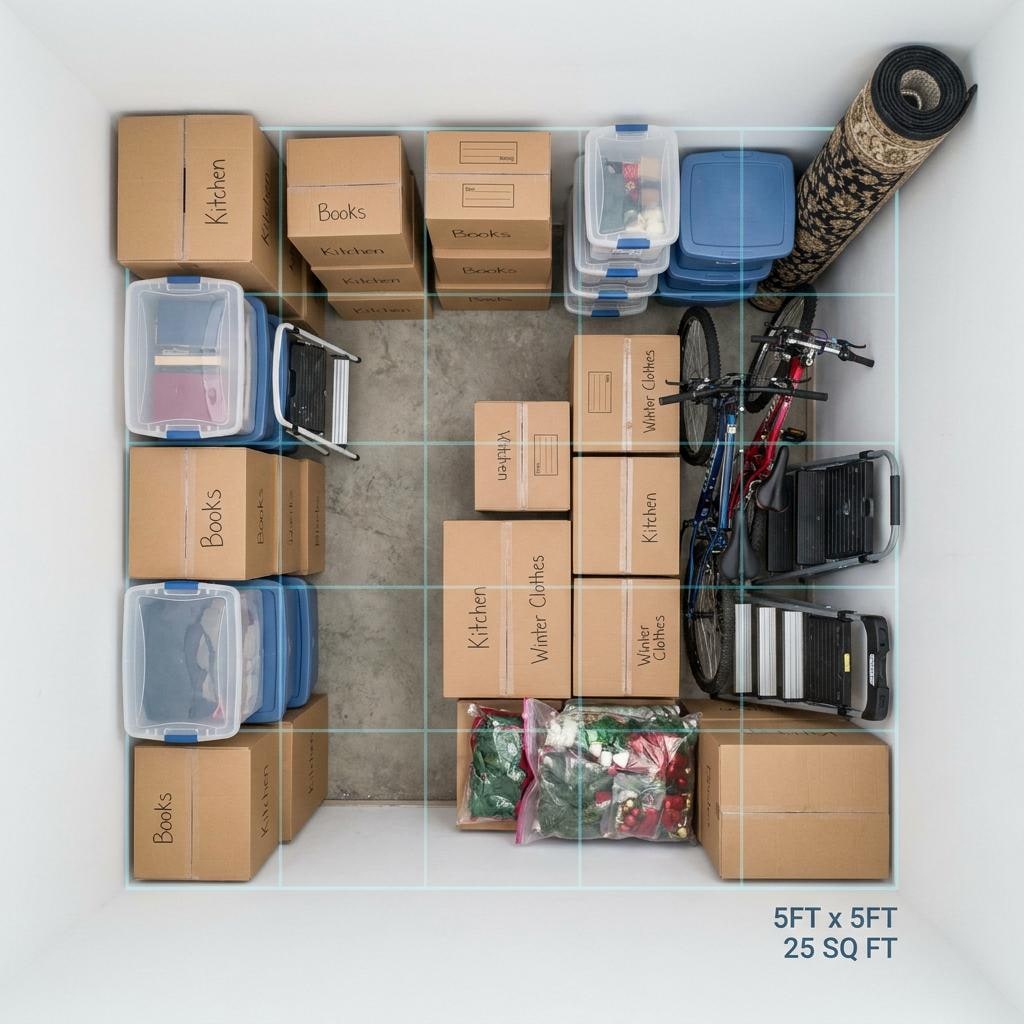
A storage unit in Miami costs about $58 to $600 a month depending on size, and most renters land in the $150 to $190 range for the most popular 10x10 unit. Climate controlled units run noticeably higher here than in most US cities, since Miami's heat and humidity make temperature control more of a necessity than a luxury. This guide breaks down current Miami storage prices by size, what pushes them up or down, how hurricane season changes the math, and where in the city you are likely to find the best rate.
Miami storage unit prices by size
Here is what Miami facilities typically charge each month, based on current street rates across the metro.
| Unit size | Typical monthly cost | With climate control | Roughly what it holds |
|---|---|---|---|
| 5x5 | $55 to $65 | $90 to $110 | A closet's worth of boxes and small items |
| 5x10 | $95 to $130 | $140 to $170 | A studio or one-bedroom apartment |
| 10x10 | $150 to $190 | $230 to $260 | One to two bedrooms of furniture |
| 10x15 | $230 to $240 | $270 to $310 | Two to three bedrooms plus appliances |
| 10x20 | $300 to $370 | $350 to $420 | A three to four bedroom home, or a car |
| 10x30 | $400 to $600 | $480 to $650 | A large home, a boat, or business inventory |
The 10x10 is the unit most Miami renters book first, and it is also where you will see the widest range between a basic drive-up unit and a climate controlled one indoors.
What drives storage prices in Miami
Several local factors push Miami rates above the national average for the same size unit.
-
Humidity and heat. South Florida's year-round humidity accelerates mold, rust, and warping, so demand for climate controlled space runs higher here than almost anywhere else in the country, and facilities price it accordingly.
-
Dense, high-value real estate. Land in Miami-Dade is expensive, and that cost shows up directly in storage rents, especially near the coast.
-
Seasonal population swings. Snowbirds and seasonal residents create a spike in demand every fall and spring, which tightens supply and lifts prices.
-
Hurricane season. Storage bookings rise sharply from June through November as residents move belongings ahead of storms, which can push short-term rates up.
-
Floor and access type. Ground-floor, drive-up units cost more than upper-floor units reached by elevator, the same as in most cities.
Is climate control worth the extra cost in Miami?
Yes, for most renters. Climate control in Miami typically adds $60 to $100 a month over a standard unit, more than the 17% to 30% premium you would see in a milder climate, because the equipment works harder here.
It is worth paying for if you are storing:
-
Wood or leather furniture, which warps and mildews in humid air
-
Electronics, appliances, and musical instruments
-
Documents, photos, and artwork
-
Anything you plan to store for more than a few months
You can usually skip the upgrade for tools, patio furniture, metal shelving, and anything you will pull out again within a month or two. If you are unsure whether you need climate control at all, the full breakdown of what climate controlled storage covers walks through it size by size.
Cheapest and priciest Miami neighborhoods for storage
Storage prices in Miami follow real estate the same way rent does, so where you book matters as much as what you book.
| Area | Price tendency | Why |
|---|---|---|
| Brickell, Downtown, South Beach | Highest | Dense, high-value coastal real estate |
| Coral Gables, Coconut Grove | Above average | Desirable, land-constrained neighborhoods |
| Kendall, Westchester | Moderate | Suburban, more facility supply |
| Hialeah, Miami Gardens, Opa-locka | Lowest | Inland, lower-cost commercial land |
Driving even ten minutes inland from the coast can knock a meaningful amount off the same size unit, so it is worth comparing a few zip codes before you book.
How hurricane season affects Miami storage prices
Hurricane season runs June through November, and it changes Miami's storage market in ways most other US cities never deal with.
-
Demand spikes before named storms, as residents move furniture, vehicles, and valuables into storage ahead of evacuations.
-
Short-term and month-to-month rates rise during these spikes, since facilities know demand is temporarily inelastic.
-
Flood zone matters. Ask whether a facility sits in a flood zone and how it handled past storms. A slightly higher rate at a facility on higher ground can be worth it.
-
Booking in winter (December through April) gets you the calmest pricing and the best selection of climate controlled units.
If you are storing anything irreplaceable, pair a climate controlled unit with your own renters or homeowners policy, since facility insurance plans often exclude flood damage specifically.
Extra fees to budget for in Miami
The monthly rate is rarely the full bill. Expect some combination of these.
| Fee | Typical cost | Notes |
|---|---|---|
| Administration fee | Around $25 to $50, one time | Charged at move-in |
| Security deposit | $0 to one month's rent | Often waived, refundable where it applies |
| Insurance or protection plan | $11 to $50 a month | Check if your home or renter policy already covers it |
| Disc lock | $10 to $20, one time | Some facilities require their own lock |
| Late fee | Around 20% of monthly rent | Charged after the grace period |
| Florida sales tax | Added to the monthly total | Rate varies slightly by county |
How to get a cheaper storage unit in Miami
-
Right-size the unit. A 10x10 that fits snugly beats a 10x15 with empty space, every time.
-
Book inland rather than on the coast or downtown if you do not need central access.
-
Avoid hurricane season if you can. Booking in winter avoids the demand spike that hits June through November.
-
Reserve online. Web-only first-month promotions are common and usually beat the walk-in rate.
-
Ask about the rate after the promo period. Miami facilities frequently raise rent after the first few months, so get the full picture before you sign.
-
Use your existing insurance. If your renters or homeowners policy already covers stored property, skip the facility's protection plan.
What size storage unit do Miami renters need?
Most Miami renters start with a 10x10 unit for a one to two-bedroom move, while a 5x10 covers a studio or small apartment. If you are not sure where to start, the guide to how much a storage unit costs nationwide breaks down pricing by size so you can compare Miami's rates against the national picture before you commit. You can also browse current listings on our Florida storage search page.
If you are weighing Miami against another major market, the cost breakdowns for New York, Los Angeles, and Dallas are worth a look for comparison.
Frequently asked questions
How much is a storage unit in Miami? A 10x10 unit averages $150 to $190 a month without climate control, or $230 to $260 with it. Smaller 5x5 units start around $55.
Is storage more expensive in Miami than the national average? Yes, for most sizes. Miami's dense real estate and high demand for climate control push prices above the US average of about $137 a month for a standard unit.
When is storage cheapest in Miami? Winter, roughly December through April, when hurricane season demand has passed and seasonal population swings settle down.
Do I need climate control for storage in Miami? Most renters benefit from it, since Miami's humidity can warp wood, damage electronics, and encourage mold faster than in drier climates.
Where is storage cheapest in Miami? Inland neighborhoods like Hialeah, Miami Gardens, and Opa-locka tend to run cheaper than Brickell, Downtown, and South Beach.
Does hurricane season affect storage prices in Miami? Yes. Demand and short-term rates rise from June through November as residents move belongings ahead of storms.
Does storage insurance in Miami cover flood damage? Not always. Facility protection plans often exclude flood damage, so check your own renters or homeowners policy and ask the facility directly about flood zone coverage.
How can I avoid overpaying for storage in Miami? Right-size your unit, book inland if location is flexible, reserve online, and avoid signing during the June to November demand spike if you can wait.