Post type: Pillar Hub: Storage unit sizes Primary keyword: storage unit sizes (Volume: 5,400 | KD: 33) Secondary keywords: what size storage unit do I need (3,600 / KD 31), 5x5 storage unit (27,100 / KD 26), 5x10 storage unit (27,100 / KD 27), 10x10 storage unit (14,800 / KD 28), 10x15 storage unit (22,200 / KD 19), 10x20 storage unit (12,100 / KD 20), 10x30 storage unit (22,200 / KD 18), how to choose the right storage unit size, what size storage unit for a car Parent pillar: N/A (this is the pillar for the storage unit sizes hub) Internal links used: How Much Is a Storage Unit?, Vehicle Storage, Car Storage Size Guide, Small Vehicle Storage Guide, How to Organize a Storage Unit, How to Create a Self Storage Inventory, Business and Commercial Storage Units, What Is Climate Controlled Storage?, California storage search, Texas storage search
Introduction
Storage units generally run from 5x5 (25 square feet) up to 10x30 (300 square feet), and most renters land on a 10x10, which holds a one to two bedroom home. The right size depends on how much you are storing, not how big the room feels when it is empty. This guide walks through every common size, what actually fits in each one, what it costs, and how to size up correctly for an apartment, a house, a vehicle, or a business without paying for space you will never use.
Storage unit size chart: every size at a glance
Here is a quick side-by-side look at the sizes you will find at almost any facility in the US.
| Size | Square feet | Typical monthly cost | About the size of | What it holds |
|---|---|---|---|---|
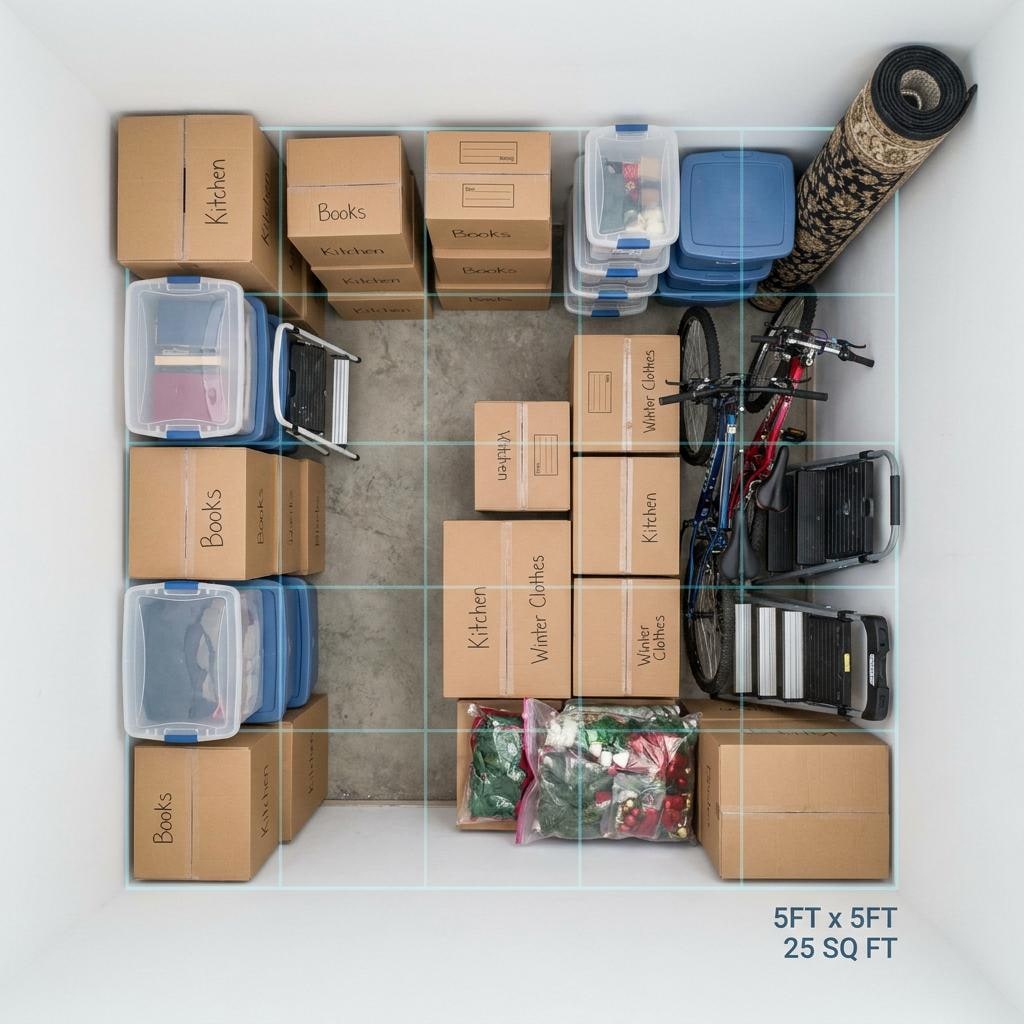
| 5x5 | 25 sq ft | $35 to $55 | A small walk-in closet | A few boxes, a small dresser, seasonal decorations |
| 5x10 | 50 sq ft | $60 to $80 | A large walk-in closet | Studio or one-bedroom furnishings, mattress, boxes |
| 5x15 | 75 sq ft | $90 to $120 | Half a one-car garage | A larger apartment, or a smaller home plus bulky items |
| 10x10 | 100 sq ft | $115 to $130 | A small bedroom | One to two bedroom home, a couch, appliances |
| 10x15 | 150 sq ft | $150 to $165 | A one-car garage | Two to three bedroom home, big furniture and appliances |
| 10x20 | 200 sq ft | $195 to $220 | A two-car garage | Three to four bedroom home, or a car plus furniture |
| 10x30 | 300 sq ft | $260 to $320 | Half a tennis court | A large home, several vehicles, or business inventory |
Prices vary by city and by whether you add climate control. See How Much Is a Storage Unit? for a full breakdown of costs, fees, and how to find a cheaper rate.
5x5 storage unit: the smallest common size
A 5x5 unit is the storage industry's version of a closet. At 25 square feet, it is tall enough to stack boxes to the ceiling but too small for full-size furniture.
It works well for:
-
Seasonal items like holiday decorations and off-season clothing
-
Small furniture such as a nightstand, a few chairs, or a small dresser
-
Boxes from a dorm room or a small apartment purge
-
Documents, files, and sports gear
Skip the 5x5 if you are storing anything from a full bedroom set or a couch. Renters who guess low on size end up paying for a second unit, which usually costs more than renting one size up from the start.
5x10 storage unit: fits a studio or one-bedroom
At 50 square feet, a 5x10 unit is roughly the footprint of a large walk-in closet or a small storage shed. This is the go-to size for a studio or one-bedroom apartment.
Typical contents:
-
A queen or full mattress and bed frame
-
A couch or loveseat
-
A dresser, a small dining set, and a TV
-
15 to 20 medium boxes
If you are storing appliances, electronics, or wood furniture long term, pair this size with climate controlled storage so heat and humidity do not damage them.
10x10 storage unit: the most rented size
The 10x10 is the single most popular storage unit size in the country, and for good reason. At 100 square feet, roughly the size of a small bedroom, it holds the contents of a one to two bedroom home when everything is stacked and packed efficiently.
A 10x10 typically fits:
-
Furniture from one to two bedrooms, including a bed, dresser, and sofa
-
A washer and dryer or a small refrigerator
-
25 to 30 boxes
-
A few larger items like a bike or a small desk
If you are on the edge between a 5x10 and a 10x10, size up. A unit that is slightly too small forces you to leave items in a hallway or a second unit, while a slightly larger unit gives you room to actually walk in and find things later. For tips on keeping a 10x10 (or any size) usable instead of a wall of boxes, see How to Organize a Storage Unit.
10x15 and 10x20 storage units: mid-size options for bigger moves
10x15 (150 sq ft) is about the size of a one-car garage and comfortably holds a two to three bedroom home. Expect to fit a full living room set, a dining table and chairs, a refrigerator, a washer and dryer, and 30 or more boxes.
10x20 (200 sq ft) is roughly a two-car garage and is the size most renters choose for a three to four bedroom home, or for a smaller home plus a vehicle. It is also the smallest size that comfortably fits a car, though many renters storing a vehicle prefer a dedicated outdoor parking spot instead of an indoor unit. See the Car Storage Size Guide for exact dimensions by vehicle type.
Both sizes work well for:
-
A full household move between homes
-
Storing furniture during a renovation
-
Combining household goods with a car, motorcycle, or a few large appliances
10x30 storage unit: the largest common size
A 10x30 unit gives you 300 square feet, close to half a tennis court, and is usually the largest standard size a facility offers without moving into a warehouse-style unit. It fits the contents of a large four to five bedroom home, multiple vehicles, or a full set of business inventory and equipment.
This size makes sense for:
-
A large home move where you need everything in one place
-
Storing a car, a boat, or an RV alongside household goods
-
Retail, contractor, or e-commerce inventory (see Business and Commercial Storage Units for setup tips)
-
Combining several smaller units into one during a long-term move
Not every facility stocks 10x30 units, so if you need this size, call ahead or check availability through a state storage search before you commit to a move-out date.
What size storage unit do you need for an apartment?
Apartment sizing comes down to bedroom count more than square footage, since apartment furniture tends to be smaller and more compact than a house's.
| Apartment | Recommended size |
|---|---|
| Studio | 5x5 to 5x10 |
| One-bedroom | 5x10 to 10x10 |
| Two-bedroom | 10x10 to 10x15 |
| Three-bedroom | 10x15 to 10x20 |
If you are storing everything from the apartment (a full move rather than just overflow), size up to the higher end of the range. If you are only storing a few pieces while you travel or between leases, the smaller end usually works.
What size storage unit do you need for a house?
Houses hold more than apartments of the same bedroom count, mainly because of garages, yards, and larger furniture, so plan for one size bigger than the apartment chart above.
| House | Recommended size |
|---|---|
| One to two bedroom house | 10x10 to 10x15 |
| Two to three bedroom house | 10x15 to 10x20 |
| Three to four bedroom house | 10x20 to 10x30 |
| Four+ bedroom house | 10x30, or two units |
Before you book, walk through the house room by room and note anything oversized, such as a sectional couch, a piano, patio furniture, or a workshop's worth of tools. Those items add up fast and are the main reason a house needs more room than the bedroom count alone suggests.
What size storage unit do you need for a car, motorcycle, RV, or boat?
Vehicle storage is its own category, and the right size depends on the vehicle and whether you need indoor or outdoor space.
-
Motorcycle: a 5x5 or 5x10 unit is usually enough on its own.
-
Standard car: 10x20 is the minimum indoor size that fits most sedans and small SUVs with the doors closing.
-
Truck or large SUV: 10x25 or 10x30 gives enough clearance.
-
Boat or RV: these usually need an outdoor parking spot or a dedicated vehicle storage lot rather than a standard indoor unit, since length matters more than square footage.
For a full breakdown of dimensions by vehicle type, indoor versus outdoor options, and typical costs, see Vehicle Storage and the Small Vehicle Storage Guide.
How to pick the right size without overpaying
Getting the size right the first time saves you from a rushed unit swap or a second rental fee later.
-
Inventory before you rent. A quick room-by-room list, or a simple self storage inventory, tells you what you are actually working with.
-
Round up, not down. If you are between two sizes, take the larger one. The cost difference between adjacent sizes is usually $20 to $40 a month, far less than renting a second unit.
-
Account for stacking. Facility size guides assume boxes stacked to about 8 feet using sturdy shelving or crates, not loose piles on the floor.
-
Leave an aisle. If you plan to access the unit regularly, subtract about 20% of the floor space for a walking path.
-
Ask about unit shape. Not all "10x10" units are square. Some are long and narrow, which changes how furniture fits even at the same square footage.
-
Check availability locally. Popular sizes like the 10x10 and 10x20 rent out fastest, especially in summer, so confirm what is in stock before your move date through a storage search by state.
Drive-up vs. indoor units: does it change the size you need?
The size you need stays the same regardless of unit type, but access matters when you are deciding between a drive-up unit and an indoor unit reached by hallway or elevator.
-
Drive-up units let you back a truck or trailer right to the door, which makes larger sizes like 10x20 and 10x30 much easier to load and unload, especially for furniture, appliances, and vehicles.
-
Indoor units are typically climate controlled and better protected from weather, but hallway widths and elevators can limit how large an item you can maneuver in, even if the unit itself is the right size on paper.
If you are storing a car, a large appliance, or bulky furniture, ask specifically about drive-up access before booking, since a unit that is technically the right dimensions can still be a tight squeeze to load through a narrow hallway.
Frequently asked questions
What is the most common storage unit size? The 10x10, at 100 square feet, is the most rented size in the US. It fits a one to two bedroom home and works for most household moves.
What size storage unit do I need for a one-bedroom apartment? A 5x10 to 10x10 unit usually covers a one-bedroom apartment, including a mattress, a couch, a dresser, and 15 to 20 boxes.
What size storage unit fits a car? Plan on a 10x20 unit for a standard car or small SUV. Larger trucks and SUVs often need a 10x25 or 10x30 for clearance.
What is the smallest storage unit size? Most facilities start at 5x5, which is about the size of a small walk-in closet and fits a handful of boxes and small furniture.
What is the biggest common storage unit size? 10x30 is the largest size most facilities offer as a standard indoor unit, holding a large home or a full set of business inventory.
How do I know if I am renting too big a unit? If you can walk around comfortably with several feet of empty floor space on every side after moving in, you likely could have gone one size smaller. A little extra room for access is fine, a mostly empty unit is not.
Do storage unit sizes vary by facility? Yes. Square footage is standardized, but ceiling height, unit shape, and whether it is drive-up or accessed by elevator can all affect how much actually fits, so it helps to ask for exact dimensions before booking.
Is it cheaper to rent one large unit or two smaller ones? One larger unit is almost always cheaper than two smaller ones with the same combined square footage, since you only pay one administration fee and one insurance charge instead of two.