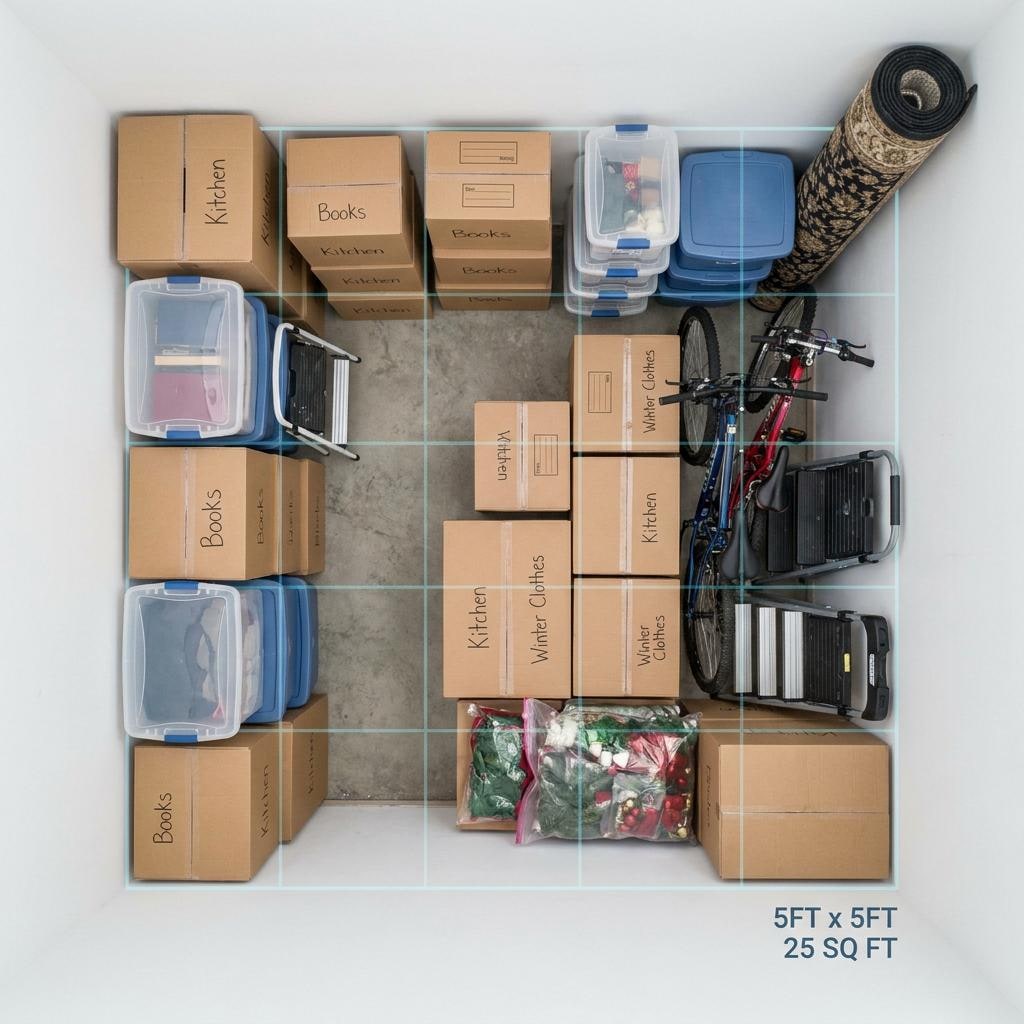
A storage unit in Jersey City costs about $60 to $480 a month depending on size, and most renters land in the $140 to $230 range for the most popular 10x10 unit. That is above the national average of roughly $137 a month, a direct result of sitting across the Hudson from Manhattan on some of the most expensive real estate in New Jersey. This guide breaks down current Jersey City storage prices by size, what pushes them up or down, how neighborhood and flood risk change the math, and where in the city you are likely to find the best rate.
Jersey City storage unit prices by size
Here is what Jersey City facilities typically charge each month, based on current street rates across the city.
| Unit size | Typical monthly cost | With climate control | Roughly what it holds |
| 5x5 | $60 to $85 | +$15 to $35 | A closet's worth of boxes and small items |
| 5x10 | $85 to $135 | +$20 to $45 | A studio or one-bedroom apartment |
| 10x10 | $140 to $230 | +$30 to $70 | One to two bedrooms of furniture |
| 10x15 | $190 to $290 | +$40 to $90 | Two to three bedrooms plus appliances |
| 10x20 | $240 to $350 | +$50 to $110 | A three to four bedroom home, or a car |
| 10x30 | $320 to $480 | +$70 to $150 | A large home or business inventory |
The 10x10 is the size most Jersey City renters book first, and it is also where you will see the widest swing between a no-frills unit in an outer neighborhood and a climate controlled one near the waterfront.
What drives storage prices in Jersey City
A few local factors push Jersey City rates above the national average for the same size unit.
-
Proximity to Manhattan. Jersey City sits directly across the Hudson River from Lower Manhattan, and that location commands a real estate premium that carries over into storage rents, especially downtown.
-
Small apartment living. Many Jersey City renters live in compact apartments and high-rise condos with little or no closet space, which keeps year-round demand for storage high and steady.
-
Limited land. Jersey City is dense and largely built out, so there is less room for new facilities to open and compete on price the way they can in sprawling metros.
-
PATH and NJ Transit commuters. A high share of residents work in New York and move frequently between apartments as leases turn over, which keeps turnover-driven demand for short-term storage elevated.
-
Floor and access type. Ground-floor, drive-up units cost more than upper-floor units reached by elevator, the same as in most cities.
Is climate control worth it in Jersey City?
Yes, for most renters. Jersey City has a full four-season climate, with humid summers that regularly top 85 degrees and cold winters that dip well below freezing. That swing is hard on anything sensitive to heat, moisture, or temperature shock. Climate control here typically adds $15 to $70 a month over a standard unit.
It is worth paying for if you are storing:
-
Wood and leather furniture, which can warp or crack with seasonal temperature swings
-
Electronics, appliances, and musical instruments
-
Documents, photos, and artwork
-
Anything stored through a full summer and winter cycle
You can usually skip the upgrade for tools, patio furniture, metal shelving, and sports gear that already handles the outdoors. For more on what belongs in a climate controlled unit, the full breakdown of what climate controlled storage covers walks through it by item type.
Cheapest and priciest Jersey City neighborhoods for storage
Storage prices in Jersey City track real estate almost exactly, so where you book matters as much as what you book.
| Area | Price tendency | Why |
| Downtown, Paulus Hook, Powerhouse District | Highest | Dense, high-rise waterfront real estate closest to Manhattan |
| Journal Square | Above average | Major transit hub with strong demand but more facility supply than downtown |
| Bergen-Lafayette, The Heights | Moderate | Transitional neighborhoods with a mix of older and newer buildings |
| Greenville, West Side | Lowest | More industrial and residential land further from the waterfront |
Driving just a mile or two inland from the Hudson waterfront toward Greenville or the West Side is usually enough to find a noticeably cheaper rate on the same size unit.
How flooding and winter weather affect Jersey City storage prices
Jersey City's location on the Hudson waterfront shapes how residents think about storage in ways that inland cities do not have to.
-
Flood zone matters. Parts of downtown and the waterfront sit in FEMA flood zones, a risk that became very real during Hurricane Sandy in 2012. Ask any facility near the water whether it has flooded before and how it is protected now.
-
Nor'easters bring heavy snow and coastal flooding. Winter storms between December and March can disrupt access to ground-floor units and occasionally cause localized flooding near the river.
-
Humid summers push climate control demand. July and August heat and humidity make temperature-controlled units the safer choice for anything sensitive, the same way they do in other dense East Coast markets.
-
Booking inland reduces flood exposure. Facilities in Greenville, the West Side, and the Heights sit at higher elevation and generally carry less flood risk than waterfront buildings.
If you are storing anything irreplaceable, pair a climate controlled unit away from the waterfront with your own renters or homeowners policy, since facility protection plans often exclude flood damage specifically.
Extra fees to budget for in Jersey City
The monthly rate is rarely the full bill. Expect some combination of these.
| Fee | Typical cost | Notes |
| Administration fee | Around $25 to $50, one time | Charged at move-in at most facilities |
| Security deposit | $0 to one month's rent | Often waived, refundable where it applies |
| Insurance or protection plan | $11 to $50 a month | Check if your home or renter policy already covers it |
| Disc lock | $10 to $20, one time | Some facilities require their own lock |
| Late fee | Around 20% of monthly rent | Charged after the grace period |
| New Jersey sales tax | 6.625%, added to the monthly total | New Jersey taxes self-storage rentals statewide |
How to get a cheaper storage unit in Jersey City
-
Right-size the unit. A 10x10 that fits snugly beats a 10x15 with empty space, every time.
-
Book inland. Greenville, the West Side, and parts of the Heights consistently undercut downtown and the waterfront.
-
Reserve online. Web-only first-month promotions are common and usually beat the walk-in rate.
-
Ask about the rate after the promo period. Jersey City facilities frequently raise rent after the first few months, so get the full picture before you sign.
-
Confirm flood history. A slightly cheaper waterfront unit is not a deal if it has flooded before.
-
Use your existing insurance. If your renters or homeowners policy already covers stored property, skip the facility's protection plan.
What size storage unit do Jersey City renters need?
Most Jersey City renters start with a 10x10 unit for a one to two-bedroom move, while a 5x10 covers a studio or small apartment, which is common here given how many renters live in compact units. If you are not sure where to start, the guide to how much a storage unit costs nationwide breaks down pricing by size so you can compare Jersey City's rates against the national picture before you commit. You can also browse current listings on our New Jersey storage search page.
If you are weighing Jersey City against another major market, the cost breakdowns for New York, Miami, and Oklahoma City are worth a look for comparison.
Frequently asked questions
- How much is a storage unit in Jersey City?
A 10x10 unit typically runs $140 to $230 a month without climate control. Smaller 5x5 units start around $60 in the more affordable parts of the city.
- Is storage more expensive in Jersey City than the national average?
Yes. Jersey City's proximity to Manhattan and limited land push prices above the US average of about $137 a month for a standard unit.
- When is storage cheapest in Jersey City?
Late fall and winter, outside of the busy summer moving season, tend to bring better rates and more availability.
- Do I need climate control for storage in Jersey City?
Many renters benefit from it given the city's humid summers and cold winters, especially for wood furniture, electronics, and documents stored for more than a few months.
- Where is storage cheapest in Jersey City?
Greenville and the West Side tend to run cheaper than Downtown, Paulus Hook, and the Powerhouse District near the waterfront.
- Does flooding affect storage in Jersey City?
It can. Parts of downtown and the waterfront sit in flood zones, a risk highlighted by Hurricane Sandy in 2012, so ask about a facility's flood history before booking near the water.
- Does storage insurance in Jersey City cover flood damage?
Not always. Facility protection plans often exclude flood damage, so check your own renters or homeowners policy and ask the facility directly about its flood zone status.
- How can I avoid overpaying for storage in Jersey City?
Right-size your unit, book inland toward Greenville or the West Side if location is flexible, reserve online, and confirm the after-promo rate before you sign.