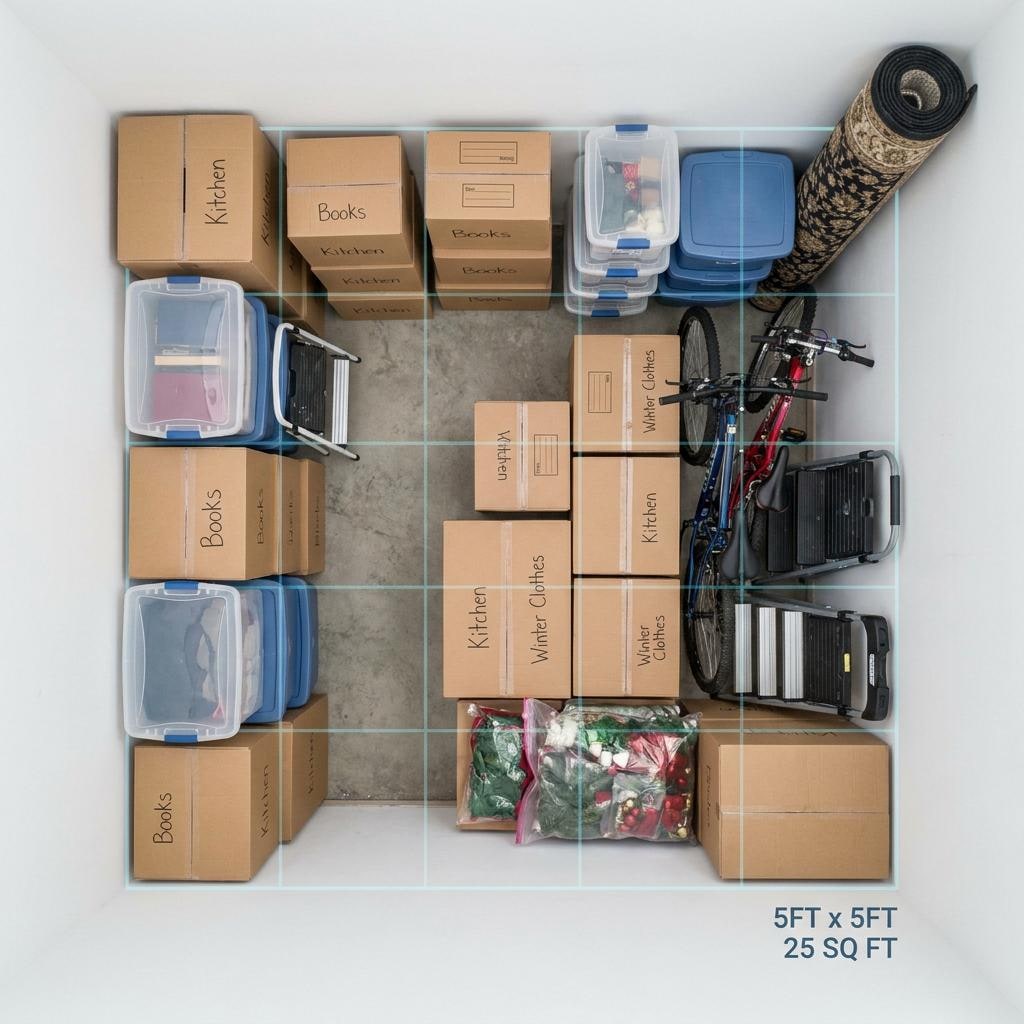
Introduction
The 10x10 is the most popular storage unit size in Los Angeles, rented more often than any other size in the city, with the 5x10 close behind as a runner-up. Together these two sizes account for roughly half of all storage rentals in LA, since they fit the contents of an apartment without forcing you to pay for space you don't need. This guide ranks the sizes Angelenos actually rent, breaks down what each one costs across the city, and helps you match a size to your own move, business, or decluttering project.
What is the most popular storage unit size in Los Angeles?
The 10x10 unit holds the top spot in Los Angeles, mainly because it matches what the city actually needs: a space big enough for a one or two-bedroom apartment's worth of boxes and furniture, but not so big that you're paying LA rent on empty square footage.
Ranked by how often LA renters choose each size:
-
10x10: the most rented size in the city, the default pick for an apartment move or downsizing.
-
5x10: a close second, popular with renters in studios and one-bedrooms who are storing less.
-
5x5: common in dense neighborhoods where closet space is tight and renters just need overflow for seasonal items and boxes.
-
10x15: picked by growing families and anyone storing a couch, mattress, and appliances alongside boxes.
-
10x20: used for full household moves, a vehicle, or a small business's inventory.
-
10x30: the least common size, reserved for whole-home storage, multiple vehicles, or commercial stock.
This mirrors the pattern nationwide, where the 10x10 and 5x10 together make up roughly half of all rentals, but Los Angeles leans even harder on these two sizes because so many residents live in apartments and condos rather than houses with garages or basements.
Storage unit sizes and prices in Los Angeles
LA rents run well above the national average because storage pricing tracks local real estate, and Los Angeles real estate is some of the most expensive in the country.
| Unit size | Typical LA monthly cost | With climate control | Popularity in LA |
|---|---|---|---|
| 5x5 | $60 to $100 | +$20 to $40 | 3rd most popular |
| 5x10 | $100 to $150 | +$25 to $55 | 2nd most popular |
| 10x10 | $190 to $280 | +$35 to $90 | 1st most popular |
| 10x15 | $260 to $340 | +$45 to $110 | 4th most popular |
| 10x20 | $320 to $430 | +$55 to $140 | 5th most popular |
| 10x30 | $430 to $560 | +$70 to $170 | Least common |
These are typical ranges across the metro, and your actual quote depends heavily on which part of Los Angeles you're renting in, which the next section covers.
Why the 10x10 wins in Los Angeles
A 10x10 unit holds roughly the contents of a one to two-bedroom apartment once everything is boxed and stacked: a sofa, a bed frame and mattress, a dresser, a dining set, and 15 to 20 boxes. That makes it the default choice for the three situations that drive most LA storage demand:
-
Moving between apartments, especially during the gap between lease-end and move-in dates that's common in LA's rental market.
-
Downsizing, when a renter moves into a smaller unit and needs to store furniture they're not ready to sell.
-
Renovation or staging, when a house or condo needs to be cleared out temporarily.
If you're only storing the contents of a studio, a 5x10 unit is usually enough and costs noticeably less. If you're storing a full house, step up to a 10x15 or 10x20 instead of overpaying for two 10x10s.
Which size fits your situation in LA
-
Studio or 1-bedroom apartment: a 5x10 covers a stacked studio, while a 10x10 gives you breathing room for a 1-bedroom with furniture.
-
2 to 3-bedroom apartment or house: a 10x15 typically fits a full household, including a sofa, mattresses, and appliances.
-
Full house or a house plus a vehicle: a 10x20 or 10x30 gives you room for furniture from every room plus a car, motorcycle, or small boat.
-
Seasonal or overflow storage only: a 5x5 handles holiday decorations, sports gear, and a handful of boxes.
-
Business inventory or equipment: size depends on volume, but most small businesses in LA start with a 10x15 and move up as stock grows.
Climate control and size in Los Angeles
Climate control is worth far more consideration in LA than in milder parts of the country, because the city's heat, dust, and occasional humidity swings can warp wood, crack leather, and damage electronics stored in a standard unit over a hot summer.
-
Climate-controlled units typically add 15% to 35% to the base rate in LA, slightly more than the national average because so many facilities offer it as a premium indoor option.
-
It's worth paying for if you're storing wood or leather furniture, electronics, documents, photos, musical instruments, or anything staying in storage longer than a few months.
-
You can usually skip it for tools, patio furniture, sports equipment, and short stays of a few weeks.
-
Smaller sizes (5x5, 5x10) see the smallest dollar increase for climate control, so it's often worth adding even if your budget is tight.
How LA neighborhoods affect size and price
Storage rates vary significantly across the metro, which changes how renters in different parts of the city think about sizing.
-
Westside and Downtown LA: the highest rates in the metro, which pushes more renters toward smaller sizes (5x5, 5x10) to keep costs down.
-
San Fernando Valley: mid-range pricing with wider availability of larger drive-up units, making 10x15 and 10x20 more common.
-
South Bay and the Valley's outer edges: generally the most affordable part of the metro, where renters are more likely to size up rather than cram belongings into a smaller unit.
If budget is tight, compare rates a few miles in either direction before committing. A 10x10 in Santa Monica can cost noticeably more than the same size unit 15 minutes inland, and visit the California storage search page to compare facilities across the state.
Tips to pick the right size and avoid overpaying in LA
-
Measure your largest items first (sofas, mattresses, appliances) since they determine the minimum size you need, not the number of boxes.
-
Stack instead of sizing up. Vertical shelving can let a 5x10 do the job of a 10x10 for many studio and 1-bedroom moves.
-
Ask about the rate after the intro period. LA facilities often lead with a promotional rate that rises after a few months.
-
Compare drive-up versus indoor access, since drive-up units in LA often run cheaper than climate-controlled indoor spaces of the same size.
-
Right-size before you rent, not after. Downsizing from a 10x15 to a 10x10 mid-lease is harder than starting with the correct size, and read our full storage cost guide before you commit.
Frequently asked questions
- What is the most popular storage unit size in Los Angeles?
The 10x10 is the most rented size in LA, followed closely by the 5x10. Together they cover most apartment moves and downsizing projects in the city.
- How much does a 10x10 storage unit cost in Los Angeles?
A 10x10 in LA typically runs $190 to $280 a month, more with climate control. Rates vary widely by neighborhood, so it pays to compare a few facilities nearby.
- What is the cheapest storage unit size in LA?
The 5x5 is the cheapest, usually $60 to $100 a month. It holds a closet's worth of boxes and small furniture.
- What size storage unit do I need for a 1-bedroom apartment in LA?
Most 1-bedroom moves fit in a 10x10, though a stacked studio can often get by with a 5x10.
- Is storage cheaper in the San Fernando Valley than on the Westside?
Generally yes. Westside and Downtown LA rates run higher across every size, while the Valley and South Bay tend to be more affordable.
- Do I need climate control for a storage unit in Los Angeles?
It's not required, but it's worth the extra 15% to 35% if you're storing wood, leather, electronics, or anything sensitive to heat for more than a few months.
- Can I store a car in a standard storage unit in LA?
Not in a 10x10 or smaller. You'll want at least a 10x20 for a car, and a 10x30 if you're storing a vehicle alongside household items.
- How do I know if I'm renting too big a unit?
If you can walk comfortably around most of your stored items without climbing over anything, you likely have more room than you need. Stack and reassess before your next renewal.