Introduction
The 10x10 is still the single most rented storage unit size in Houston, but it shares the spotlight more than it does in denser cities, since 10x15 and 10x20 units see noticeably higher demand here than in places like Los Angeles or New York. That pattern tracks with how Houston actually lives: sprawling suburbs, bigger homes with attached garages, and a huge number of movers passing through every year. This guide ranks the sizes Houston renters pick most, breaks down what each one costs across the metro, and helps you match a size to your own move, garage cleanout, or business inventory.
What is the most popular storage unit size in Houston?
The 10x10 holds the top spot in Houston, the same as it does nationwide, because it comfortably fits a one to two-bedroom household's worth of furniture and boxes without forcing you to pay for unused square footage.
Ranked by how often Houston renters choose each size:
-
10x10: the most rented size in the metro, the standard pick for an apartment move or a basic household cleanout.
-
10x15: a strong second in Houston, more popular here than in apartment-heavy cities, since many renters are clearing out single-family homes with garages rather than apartments.
-
5x10: popular with renters in Houston's large apartment market, especially inside the Loop and near the Energy Corridor.
-
10x20: common for full-home moves, vehicle storage, or small business inventory, reflecting Houston's larger average home size.
-
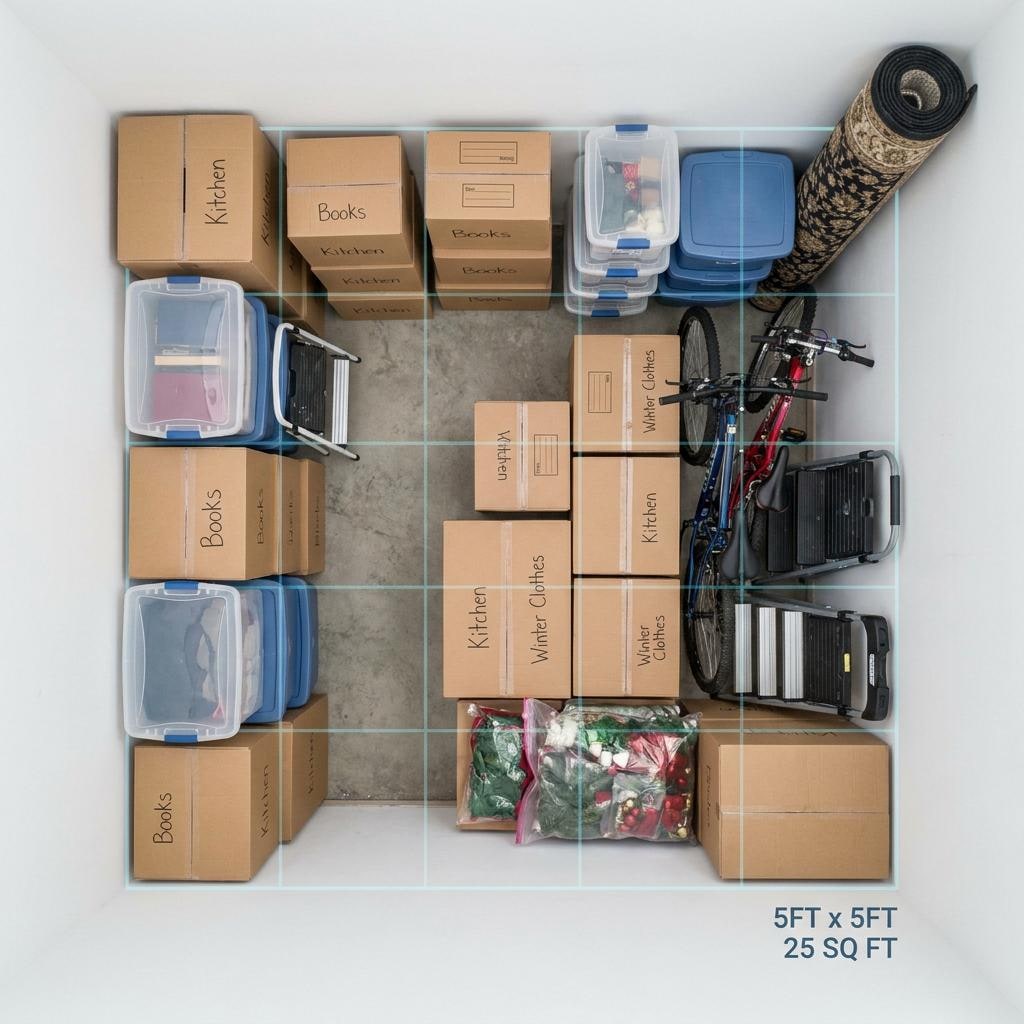
5x5: used mainly for seasonal gear, holiday decorations, and overflow boxes.
-
10x30: the least common size, reserved for whole-home storage, multiple vehicles, or commercial stock.
This mirrors the nationwide pattern, where the 10x10 and 5x10 together make up roughly half of all rentals, but Houston leans harder on the mid-to-large sizes because so many residents are moving out of houses with garages and attics rather than small apartments.
Storage unit sizes and prices in Houston
Houston storage runs well below the national average for every size, since land is abundant and the metro has one of the largest concentrations of self-storage supply in the country.
| Unit size | Typical Houston monthly cost | With climate control | Popularity in Houston |
|---|---|---|---|
| 5x5 | $30 to $55 | +$20 to $35 | 5th most popular |
| 5x10 | $50 to $85 | +$25 to $45 | 3rd most popular |
| 10x10 | $70 to $120 | +$30 to $55 | 1st most popular |
| 10x15 | $95 to $150 | +$35 to $65 | 2nd most popular |
| 10x20 | $120 to $190 | +$40 to $80 | 4th most popular |
| 10x30 | $160 to $260 | +$55 to $100 | Least common |
These are typical ranges across the metro. Street rates advertised by facilities tend to run toward the higher end, while promotional move-in rates and booked prices land closer to the lower end, so always confirm the current rate before you commit.
Why mid-size units do so well in Houston
A 10x15 unit holds roughly the contents of a two to three-bedroom home once a sofa, mattresses, a dining set, and the contents of a garage are boxed and stacked. That size does better in Houston than in most major cities for a few reasons:
-
More single-family homes. Houston has far more detached houses with garages and attics than dense coastal metros, so movers often have more to store per move.
-
A huge moving market. Houston is consistently one of the top metros for inbound and outbound moves each year, driven by the energy sector, healthcare, and the port.
-
Suburban sprawl. Spread-out suburbs like Katy, Cypress, and Pearland tend to have bigger households and more garage-sized belongings than renters in tighter urban cores.
If you are only storing the contents of an apartment, a 5x10 unit is usually enough. If you are clearing out a house with a garage, size up to a 10x20 instead of overpaying for two 10x10s.
Which size fits your situation in Houston
-
Apartment or townhome: a 5x10 covers a studio or one-bedroom, while a 10x10 gives breathing room for a one or two-bedroom with furniture.
-
Single-family home, 2 to 3 bedrooms: a 10x15 typically fits a full household, including a sofa, mattresses, and major appliances.
-
Full house, a garage's worth of items, or a vehicle: a 10x20 or 10x30 gives room for furniture from every room plus a car, boat, or small business's stock.
-
Seasonal or overflow storage only: a 5x5 handles holiday decorations, sports gear, and a handful of boxes.
-
Business inventory or equipment: most small businesses in the Houston area start around a 10x15 and move up as stock grows.
Climate control and size in Houston
Climate control is close to a necessity in Houston rather than a nice-to-have, because the Gulf Coast's year-round humidity and summer heat can warp wood, rust metal, and grow mildew inside a standard unit faster than almost anywhere else in the country.
-
Climate-controlled units typically add 25% to 45% to the base rate in Houston, a steeper premium than the national average because facilities run the equipment harder for more of the year.
-
It is worth paying for if you are storing wood or leather furniture, electronics, documents, photos, musical instruments, or anything staying in storage longer than a few months.
-
Houston also sits in an active hurricane corridor, and storage demand tends to spike in the months leading into and through hurricane season as residents move belongings ahead of storms, which can tighten availability for climate-controlled space.
-
You can usually skip the upgrade for tools, patio furniture, and short stays of a few weeks.
How Houston neighborhoods and suburbs affect size and price
Storage prices in Houston vary a lot depending on how close you are to the urban core, which changes how renters think about sizing.
| Area | Price tendency | Why |
|---|---|---|
| Inner Loop, Montrose, The Heights, Rice Village | Highest | Dense, land-constrained, high-demand neighborhoods |
| Energy Corridor, Galleria, Memorial | Above average | Desirable, high-income suburbs close to major employers |
| Katy, Cypress, Pearland, Sugar Land | Moderate to affordable | Newer suburban development with more facility supply |
| Outer suburbs and exurbs | Lowest | Abundant land and lower-cost commercial real estate |
If budget is tight, compare rates a few exits in either direction on the loop or a nearby highway before committing, since the same size unit can cost noticeably more inside the Loop than 20 minutes out. You can browse current facilities on the Texas storage search page.
Tips to pick the right size and avoid overpaying in Houston
-
Measure your largest items first (sofas, mattresses, appliances, a vehicle) since they set the minimum size you need, not the number of boxes.
-
Stack instead of sizing up. Vertical shelving can let a 10x10 do the job of a 10x15 for many household moves.
-
Ask about the rate after the intro period. Houston facilities often lead with a promotional rate that climbs after a few months.
-
Compare drive-up versus climate-controlled indoor units, since drive-up units in Houston often run noticeably cheaper for the same square footage.
-
Right-size before you rent, not after. Read the full storage cost guide for national pricing context before you commit, or compare how Houston stacks up against Dallas and Los Angeles if you are weighing multiple markets.
Frequently asked questions
- What is the most popular storage unit size in Houston?
The 10x10 is the most rented size in Houston, with the 10x15 a close second thanks to the metro's large share of single-family homes with garages.
- How much does a 10x10 storage unit cost in Houston?
A 10x10 in Houston typically runs $70 to $120 a month without climate control, or roughly $100 to $170 with it, depending on the neighborhood.
- What is the cheapest storage unit size in Houston?
The 5x5 is the cheapest, usually $30 to $55 a month. It holds a closet's worth of boxes and small items.
- What size storage unit do I need for a house in Houston?
Most single-family homes fit in a 10x15 to 10x20, depending on how much furniture and garage overflow you are storing.
- Is storage cheaper in the Houston suburbs than inside the Loop?
Generally yes. Inner Loop neighborhoods like Montrose and The Heights run higher across every size, while suburbs like Katy and Cypress tend to be more affordable.
- Do I need climate control for a storage unit in Houston?
Most renters benefit from it. Houston's heat and humidity can warp wood, damage electronics, and encourage mold faster than in drier climates, and the premium runs 25% to 45% above the base rate.
- Does hurricane season affect storage demand in Houston?
Yes. Demand for both storage space and climate-controlled units tends to rise in the months leading into hurricane season as residents move belongings ahead of storms.
- How do I know if I am renting too big a unit?
If you can walk comfortably around most of your stored items without climbing over anything, you likely have more room than you need. Stack and reassess before your next renewal.