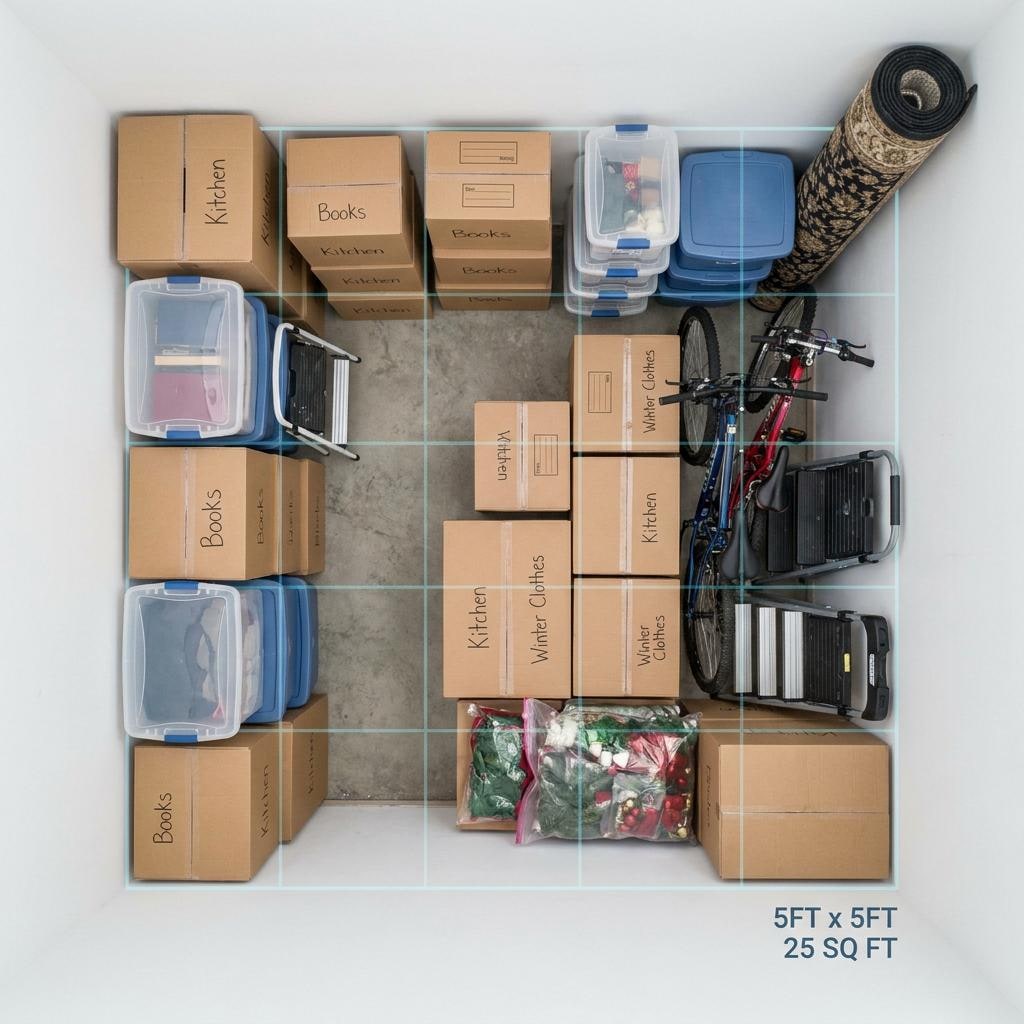
A storage unit in New York City costs about $40 to $650 a month depending on size and borough, and most renters land in the $150 to $320 range for the most popular 10x10 unit. Manhattan runs well above that, often $225 to $500 or more for the same size, while the Bronx, Queens, and Staten Island regularly undercut it. This guide breaks down current New York City storage prices by size, what pushes them up or down, how the city's borough divide and moving-day rushes change the math, and where you are likely to find the best rate.
New York City storage unit prices by size
Here is what New York City facilities typically charge each month, based on current street rates across the five boroughs.
| Unit size | Typical monthly cost | With climate control | Roughly what it holds |
|---|---|---|---|
| 5x5 | $40 to $120 | +$20 to $40 | A closet's worth of boxes and small items |
| 5x10 | $70 to $190 | +$25 to $55 | A studio or small one-bedroom apartment |
| 10x10 | $150 to $320 | +$40 to $90 | One to two bedrooms of furniture |
| 10x15 | $200 to $400 | +$50 to $110 | Two to three bedrooms plus appliances |
| 10x20 | $260 to $480 | +$60 to $140 | A three to four bedroom home, or a car |
| 10x30 | $350 to $650 | +$80 to $180 | A large home or business inventory |
Manhattan sits above the top of every one of these ranges for a comparable unit, sometimes by $150 or more, while a unit in the Bronx or eastern Queens can land near the bottom. Always compare a few neighborhoods before you book, since the price swing inside one city is bigger here than almost anywhere else in the country.
What drives storage prices in New York City
Several local factors explain why the same size unit can cost so differently block by block.
-
Borough and neighborhood. Manhattan's land costs push every size up, Brooklyn's in-demand neighborhoods like Williamsburg and Park Slope run above average, and the Bronx, Staten Island, and outer Queens tend to be the most affordable.
-
Apartment size. New York apartments are small by national standards, so demand for compact 5x5 and 5x10 units is higher here than in most cities, which keeps those sizes from being quite as cheap as you would expect.
-
Moving day crunches. Leases across the city commonly turn over around June 1 and September 1, and both dates bring a short, sharp spike in storage demand.
-
Building access. Walk-up apartments without a freight elevator often mean movers need extra help, and some renters choose storage specifically to avoid repeated trips up the stairs.
-
Floor and access type. Ground-floor, drive-up units cost more than upper-floor units reached by elevator, the same as in most cities.
Is climate control worth it in New York City?
Yes, for a lot of renters. New York gets humid summers and cold, damp winters, and climate control here typically adds $20 to $90 a month over a standard unit depending on size.
It is worth paying for if you are storing:
-
Wood and leather furniture, which can warp or mildew in humid summers
-
Electronics, appliances, and musical instruments, especially for the city's many musicians working out of small apartments
-
Documents, photos, and artwork
-
Anything stored longer than a season, since basements and ground-floor units can pick up moisture
You can usually skip the upgrade for tools, sports gear, seasonal decor, and anything you will pull back out within a month or two. If you are still deciding, the full breakdown of what climate controlled storage covers walks through it by item type.
Cheapest and priciest New York City boroughs for storage
Storage prices in New York City follow real estate values closely, so your borough matters as much as your unit size.
| Borough | Price tendency | Why |
|---|---|---|
| Manhattan | Highest | Dense, land-constrained, and the most expensive real estate in the city |
| Brooklyn | Above average | Fast-rising demand in neighborhoods like Williamsburg, Park Slope, and DUMBO |
| Queens | Moderate | More facility supply overall, with Long Island City running higher than eastern Queens |
| Bronx and Staten Island | Lowest | More industrial and light-commercial land keeps overhead lower |
Crossing a bridge or a few subway stops out of Manhattan can cut a meaningful amount off the same size unit, so it is worth widening your search before you book, especially if you can handle a slightly longer trip to access your things.
How moving season affects New York City storage prices
New York's storage market runs on the city's own calendar of lease turnovers and seasonal demand.
-
June 1 and September 1 are the city's unofficial moving days. Many leases turn over on or near these dates, and both bring a short-term jump in storage demand and prices.
-
Late August and early September add a second wave, as college students move in and out of dorms and shared apartments across the city.
-
Winter, roughly December through February, is the calmest stretch, with fewer movers competing for space and better odds of a move-in deal.
-
Year-round demand stays higher than in most cities simply because apartments are small, so storage here is less seasonal overall than in a market driven by weather or tourism.
If your move lines up with June 1 or Labor Day weekend, booking a few weeks ahead gets you more choice and a better rate than waiting until the week of your move.
Extra fees to budget for in New York City
The monthly rate is rarely the full bill. Expect some combination of these.
| Fee | Typical cost | Notes |
|---|---|---|
| Administration fee | Around $25 to $50, one time | Charged at move-in |
| Security deposit | $0 to one month's rent | Often waived, refundable where it applies |
| Insurance or protection plan | $12 to $50 a month | Check if your renters policy already covers it |
| Disc lock | $10 to $20, one time | Some facilities require their own lock |
| Late fee | Around 20% of monthly rent | Charged after the grace period |
| Sales tax | Usually none | Self-serve unit rentals are generally treated as a real estate lease under New York tax rules, not a taxable service, though full-service or valet storage can be taxed differently |
How to get a cheaper storage unit in New York City
-
Right-size the unit. A 5x10 that fits snugly beats a 10x10 with empty space, every time.
-
Look outside Manhattan. The Bronx, Staten Island, outer Queens, and parts of Brooklyn consistently undercut Manhattan for the same size.
-
Avoid June 1 and Labor Day week if you can. Booking a few weeks before or after the rush gets you better rates and more open units.
-
Reserve online. Web-only first-month promotions are common and usually beat the walk-in rate.
-
Ask about the rate after the promo period. Many facilities raise rent after the first few months, so get the full picture before you sign.
-
Use your existing insurance. If your renters policy already covers stored property, skip the facility's protection plan.
What size storage unit do New York City renters need?
Because apartments run small here, New York renters book smaller units than the national average. A 5x10 unit covers most studios and small one-bedrooms, while a 10x10 handles a full one or two-bedroom move. If you are storing a car you cannot park on the street, the vehicle storage guide covers what size unit fits each type. For the national picture on pricing, the guide to how much a storage unit costs breaks it down by size so you can compare New York against the rest of the country. You can also browse current listings on our New York storage search page.
If you are weighing New York against another major market, the cost breakdowns for Miami, Salt Lake City, Los Angeles, and Dallas are worth a look for comparison.
Frequently asked questions
- How much is a storage unit in New York City?
A 10x10 unit typically runs $150 to $320 a month citywide, and $225 to $500 or more in Manhattan. Smaller 5x5 units start around $40 in the cheaper boroughs.
- Is storage more expensive in New York than the national average?
Yes, for most sizes and boroughs. New York's dense real estate pushes prices well above the US average of about $137 a month, though the Bronx and Staten Island can come close to the national range.
- When is storage cheapest in New York City?
Winter, roughly December through February, after the holidays and before the spring moving rush picks back up.
- Do I need climate control for storage in New York City?
Many renters benefit from it because of humid summers and damp winters, especially for wood furniture, electronics, instruments, and documents.
- Where is storage cheapest in New York City?
The Bronx, Staten Island, and outer Queens tend to run cheaper than Manhattan, Brooklyn's in-demand neighborhoods, and Long Island City.
- Does moving season affect storage prices in New York City?
Yes. Demand and prices tend to spike around June 1 and Labor Day, when a large share of city leases turn over at once.
- Is self storage taxable in New York City?
Usually not. New York treats a self-serve unit rental as a lease of real property rather than a taxable storage service, so most month-to-month units are not subject to sales tax, though full-service storage can be taxed differently.
- How can I avoid overpaying for storage in New York City?
Right-size your unit, check prices outside Manhattan, reserve online, and avoid booking during the June 1 or Labor Day moving rush if your schedule allows it.